
Horizontal Hydraulic Baler
Horizontal Hydraulic Baler
The Horizontal Hydraulic Baler is an industrial compression machine designed to compact loose materials such as waste paper, cardboard, plastic bottles, woven bags, films, crop straw, and industrial scrap into dense and uniform bales. Equipped with an 80-ton fully automatic hydraulic system, PLC intelligent control, and conveyor feeding, it delivers high-efficiency continuous operation while reducing transportation and storage costs.
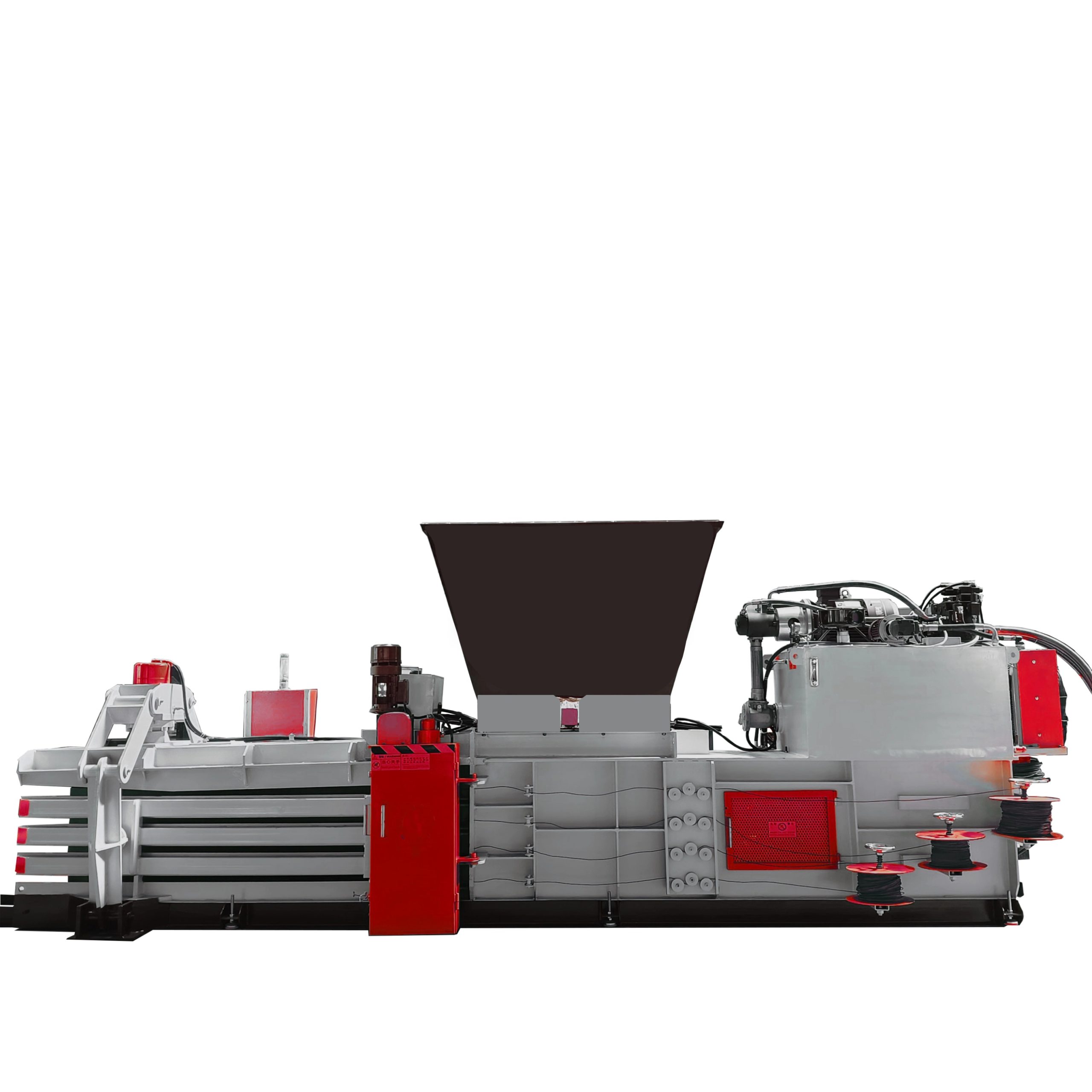
The 80T Fully Automatic Horizontal Hydraulic Baler is a high-performance industrial machine powered by an advanced hydraulic compression system. It is specifically designed to compress various loose materials into compact, high-density bales for easier storage, handling, transportation, and recycling processes.
Unlike vertical balers, the horizontal design enables continuous feeding and automated production cycles, making it suitable for medium to large-scale operations. The machine integrates intelligent control systems with durable structural components to ensure stable and long-term operation.
Product Specifications
- Nominal Pressure: 80T (800KN)
- Material Type:
- Waste paper
- Cardboard
- Plastic bottles
- Woven bags
- Plastic films
- Industrial waste
- Straw and biomass materials
- Feeding Method:
- Fully automatic conveyor feeding system
- Adjustable feeding speed
- Bale Discharge:
- Fully automatic side or front bale ejection
- Bale Size:
- Standard: 800 × 600 × 500 mm
- Custom sizes available
- Bale Weight:
- 50–120kg depending on material density
- Hydraulic System:
- Rated pressure 25MPa
- Flow rate 40L/min
- Motor Power:
- 15KW copper motor
- Operating Cycle:
- 30–45 seconds per bale
- Machine Dimensions:
- 4800 × 1800 × 2200 mm
- Control System:
- PLC intelligent control
- Touch-screen operation panel
- One-button startup
- Fault self-diagnosis
- Automatic alarm system
- Material Construction:
- Q235 reinforced steel body
- 45# seamless hydraulic cylinder
- Imported high-pressure sealing rings
- Safety Features:
- Emergency stop button
- Infrared safety protection
- Pressure overload protection
- Door-open power cut protection
- Power Supply:
- 380V / 50Hz
- Machine Weight:
- Approximately 4.5 tons
Main Features
High Compression Performance
The machine applies powerful horizontal hydraulic force to significantly reduce material volume.
Typical compression performance:
- Waste paper: 10–15 times volume reduction
- Plastic bottles: 20–30 times volume reduction
- Straw and films: 30+ times volume reduction
This greatly reduces warehouse space and transportation expenses.
Intelligent Automation System
The PLC control system provides:
- Automatic operating cycles
- One-button operation
- Adjustable pressure settings
- Automatic fault detection
- Safety monitoring system
Continuous Feeding Operation
The fully automatic conveyor feeding system enables uninterrupted production and improves operational efficiency.
Durable Heavy-Duty Structure
Built with reinforced steel and industrial-grade hydraulic components for stable performance and long service life.
Wide Material Compatibility
Suitable for processing:
- Waste paper
- Cardboard
- Plastic bottles
- Plastic films
- Woven bags
- Agricultural straw
- Textile waste
- Foam products
- Metal scraps
- Industrial waste materials
Application Industries
- Recycling centers
- Paper mills
- Packaging factories
- Plastic processing facilities
- Textile factories
- Agricultural biomass plants
- Waste treatment facilities
- Logistics centers
- Industrial manufacturing plants
Advantages
- Reduces transportation costs
- Saves warehouse space
- Improves processing efficiency
- Supports continuous production
- Low labor requirements
- High safety performance
- Long service life
- Customizable configurations
Frequently Asked Questions
How does a horizontal hydraulic baler achieve continuous operation?
Materials are continuously supplied by conveyors, compressed by hydraulic cylinders, tied automatically, and discharged for uninterrupted production.
How are compression ratio and bale density determined?
Typical values range from 5:1 to 15:1 depending on the material type and density requirements.