
Experimental Reactor
Experimental Reactor
The Experimental Reactor is a precision laboratory reaction system designed for heating, cooling, vacuum processing, reflux, distillation, and mixing applications. With accurate temperature control and multifunctional operation, it is widely used for chemical synthesis, extraction, crystallization, polymerization, and pilot-scale research.
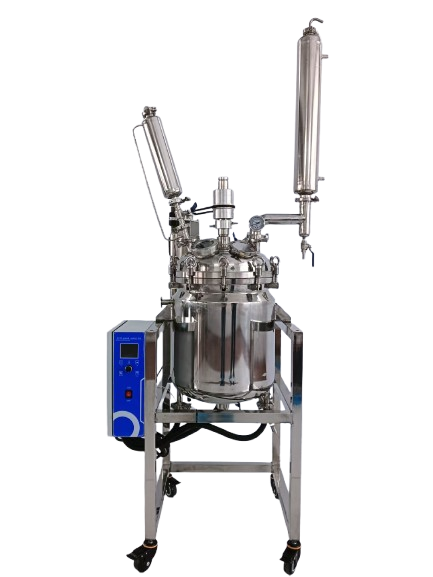
Product Parameters
10L capacity, heating, vacuum reflux
Product Introduction
The 10L laboratory heating and cooling reactor (commonly available in double-layer glass or stainless steel jacketed type) is a core laboratory device used for precise temperature control, stirring, vacuum or atmospheric pressure reactions. Through jacket circulation of heating and cooling media, it achieves a wide temperature control range from -80°C to 300°C, making it suitable for laboratory and pilot-scale research including chemical synthesis, extraction, distillation, polymerization, and crystallization.
I. Core Structure & Temperature Control Principle
Double-Layer Jacket Design
Inner Layer
Effective volume: 10L
Serves as the reaction chamber where materials react.
Outer Jacket Layer
Circulates thermal oil, hot water, or cooling liquids such as glycol or ethanol to form a closed-loop system for heating, cooling, and constant temperature control.
Temperature Control Method
Connected with high and low temperature circulators, oil bath systems, or chillers.
PID intelligent temperature control with accuracy of ±0.5~1°C.
Temperature Range
- Glass Type: -80°C ~ 200°C
- Stainless Steel Type: -196°C ~ 350°C
Materials
Glass Type
GG17 / 3.3 high borosilicate glass featuring:
- Acid and alkali resistance
- Transparent visibility
- Thermal shock resistance
Stainless Steel Type
SUS304 / 316L stainless steel featuring:
- High pressure resistance
- High temperature resistance
- Strong corrosion resistance
Sealing & Stirring
PTFE (Teflon) material with:
- High and low temperature resistance
- Corrosion resistance
- Leak-free performance
II. Core Functions
1. Precision Heating & Cooling (Core Function)
Heating
The jacket circulates high-temperature thermal oil or hot water for programmed heating and constant temperature operation.
Cooling / Refrigeration
Circulates low-temperature cooling liquid for rapid cooling and low-temperature reactions down to -80°C.
Constant Temperature
Temperature control accuracy of ±0.5~1°C with stable long-term operation.
Rapid Heating & Cooling Switching
Fast switching suitable for exothermic and endothermic reaction temperature control.
2. Stirring & Mixing
Variable Frequency Speed Control
- Speed range: 0~600rpm
- Digital display
- Stable stirring speed
Stirring Impeller
Four-blade or crescent-type PTFE-coated impellers for uniform mixing without dead corners.
Sealing
Mechanical seal or magnetic seal with leak-free vacuum operation at -0.098MPa.
3. Vacuum & Pressure Control
Vacuum Operation
- Vacuum range: -0.095~-0.1MPa
- Reduces boiling point
- Prevents oxidation
- Improves evaporation efficiency
Atmospheric & Positive Pressure
- Glass type: atmospheric or slight positive pressure
- Stainless steel type: up to 10MPa for high-pressure models
Safety
Includes:
- Vacuum gauge
- Safety valve
- Explosion-proof membrane
- Overpressure alarm
4. Reflux, Distillation & Rectification
Condenser
Equipped with glass or stainless steel condensers for:
- Solvent reflux
- Solvent recovery
- Distillation
Constant Pressure Funnel
1L funnel for uniform material feeding.
Multi-Port Design
5~6 ports for:
- Stirring
- Temperature measurement
- Condensation
- Feeding
- Sampling
5. Intelligent Control & Safety
Digital Display
Real-time display of:
- Temperature
- Stirring speed
- Vacuum degree
- Pressure
Programmable Temperature Control
Supports:
- Multi-stage heating
- Heat preservation
- Cooling
- Automatic operation
Protection System
Includes:
- Over-temperature protection
- Overpressure protection
- Overload automatic power-off
- Audible and visual alarms
6. Discharge & Cleaning
Bottom Discharge Valve
PTFE or glass valve for complete discharge without material residue.
Quick-Open Structure
Quick-opening reactor cover for:
- Easy cleaning
- Convenient maintenance
- High-pressure sterilization (stainless steel type)
III. Typical Technical Parameters (10L Double-Layer Glass Type)
| Parameter | Specification |
|---|---|
| Effective Volume | 10L |
| Jacket Volume | ~8L |
| Temperature Control Range | -80°C~200°C |
| Temperature Accuracy | ±1°C |
| Stirring Speed | 0~500rpm |
| Vacuum Degree | -0.098MPa |
| Material | Borosilicate Glass 3.3 / SUS304 / PTFE |
| Motor | 90~150W variable frequency explosion-proof |
| Dimensions | ~Φ300×H1500mm |
| Power Supply | 220V / 50Hz |
IV. Application Fields
Chemical Synthesis
- Organic synthesis
- Condensation
- Oxidation
- Reduction
- Esterification
- Hydrolysis
Pharmaceutical & Biological Industry
- Laboratory testing
- Pilot-scale production
- Crystallization
- Extraction
- Enzyme catalysis
Material Industry
- Polymerization
- Emulsification
- Nanomaterial preparation
Fine Chemical Industry
- Dye development
- Flavor and fragrance research
- Additive development
Low & High Temperature Applications
- -80°C deep cooling
- 200°C high temperature processing
- Vacuum distillation
V. Glass Type vs Stainless Steel Type (10L)
| Type | Advantages | Limitations | Suitable Applications |
|---|---|---|---|
| Double-Layer Glass | Transparent visibility, acid & alkali resistance, easy cleaning, low cost | Not suitable for high pressure (<0.1MPa), temperature limit below 250°C | Atmospheric/vacuum reactions requiring observation |
| Stainless Steel | High pressure resistance (1~10MPa), withstands 350°C, strong corrosion resistance, durable | Non-transparent, higher cost, heavier | High temperature & pressure, hydrogenation, catalytic and strong corrosive reactions |
VI. Standard Configuration List
Main Unit
- 10L double-layer reactor vessel
- Support frame with caster wheels
Stirring System
- Variable frequency motor
- PTFE stirring impeller
- Mechanical sealing system
Temperature Control
- PT100 sensor
- Digital display controller
Accessories
- Condenser
- 1L constant pressure funnel
- Vacuum gauge
- Discharge valve
Sealing Components
- PTFE gasket
- Vacuum sealing grease
VII. Selection Guide
Material Selection
- Choose glass type for visual observation
- Choose 316L stainless steel for high temperature, high pressure, or strong corrosive environments
Temperature Range Selection
- Use high and low temperature circulator for -80°C~200°C applications
- Use oil bath system for heating-only applications
Pressure Selection
- Glass type for vacuum or atmospheric pressure
- Stainless steel high-pressure reactor for pressure above 1MPa
Stirring Selection
- Paddle type for low viscosity materials
- Anchor or ribbon type for high viscosity materials
Control System Selection
- Basic digital display for standard applications
- PLC touchscreen and programmable temperature control for complex processes