
Horizontal Mixers
Horizontal Mixers
5000L horizontal mixer designed for efficient mixing of powders, granules, pastes, and various industrial materials with high uniformity and low energy consumption.
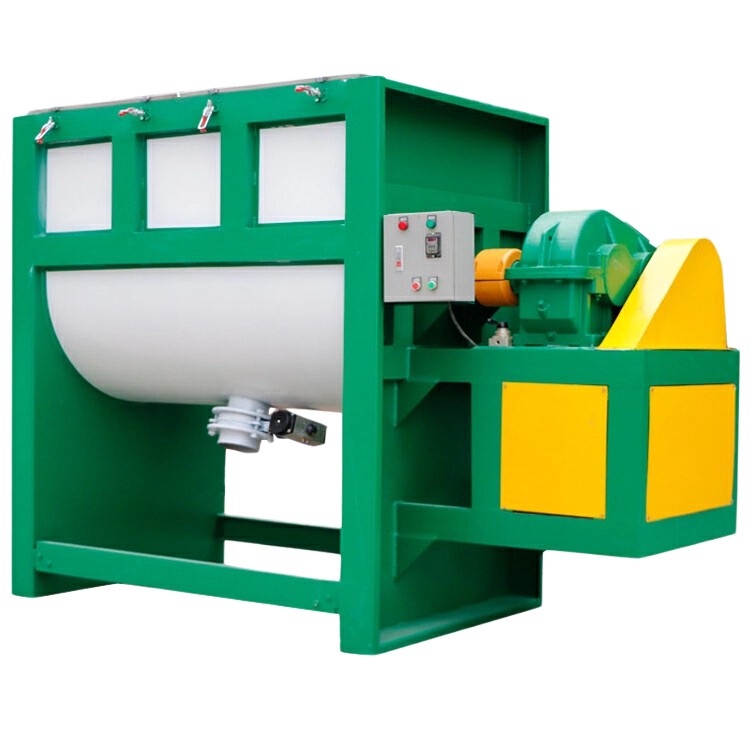
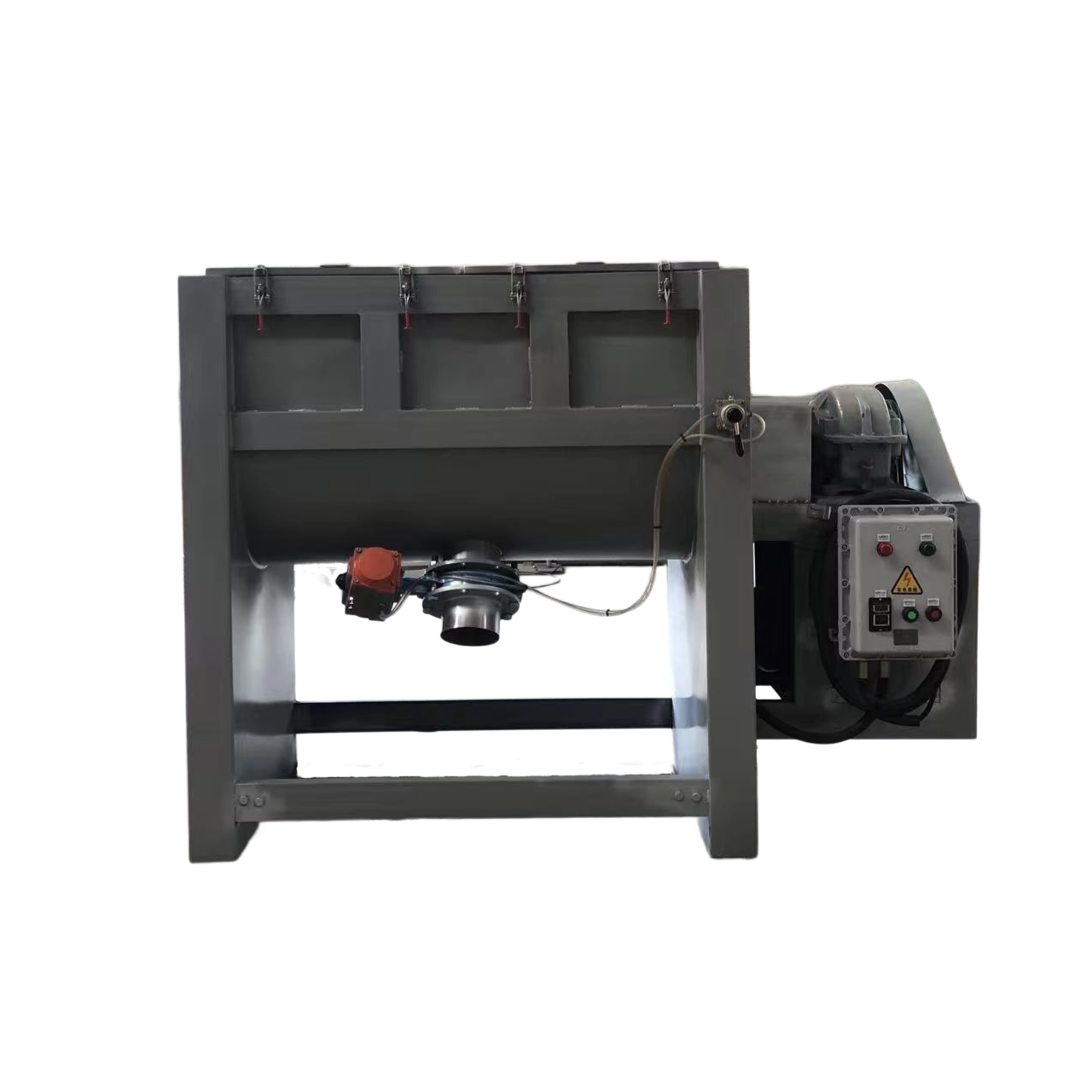
The horizontal mixer, also known as a horizontal ribbon blender, is a high-efficiency industrial mixing machine designed for fast and uniform mixing of powders, granules, fibers, and paste materials. It is widely used in chemical, feed, food, pharmaceutical, construction material, and environmental industries.
This equipment uses a horizontal structure with a single-shaft double-ribbon design. The inner ribbon moves materials from the center toward both sides, while the outer ribbon transfers materials from both sides toward the center, creating strong convection circulation and multi-directional movement. This mixing process eliminates dead zones and ensures complete material blending.
The machine provides high mixing performance with uniformity levels exceeding 98% and a coefficient variation (CV) ≤5%. Compared with vertical mixers, it offers 30%–50% higher efficiency and typically completes one mixing cycle within 5–15 minutes.
The machine supports a wide range of materials including powders, granules, fibers, flakes, pastes, and high-viscosity materials. It can also be equipped with liquid spraying systems for solid-liquid mixing applications such as adding oils, adhesives, or other additives.
The horizontal U-shaped chamber ensures smooth material flow with minimal residue and easy cleaning. Multiple material options including carbon steel, SUS304, and SUS316L stainless steel are available for food-grade, pharmaceutical, or corrosion-resistant applications.
Optional configurations include heating and cooling jackets, high-speed chopper blades for breaking material lumps, vacuum or pressure operation systems, and PLC intelligent control systems for fully automated production.
Typical applications include feed premixes, flour mixing, chemical powders, pigments, fertilizers, dry mortar, putty powder, organic fertilizers, pharmaceutical powders, and food additives.
Frequently Asked Questions
What is a horizontal mixer and how does it compare with a vertical mixer?
Compared with vertical mixers, horizontal mixers generally provide faster mixing speed, higher mixing uniformity, larger loading capacity, and better performance for difficult materials.
However, they usually require more installation space and a larger initial investment.
What are the main types of horizontal mixers and how should they be selected?
Ribbon mixers — suitable for powders, granules, and low-viscosity materials.
Paddle mixers — suitable for high-moisture and fiber materials.
Plough mixers — suitable for materials with agglomeration or fibers.
Twin-shaft mixers — suitable for large-volume production.
Continuous mixers — designed for production line operation.
Selection depends on material characteristics, viscosity, production capacity, and application requirements.
What are the main structural components of a horizontal mixer?
Mixing chamber (U-shaped or cylindrical structure)
Mixing shaft and blades
Drive system including motor and reducer
Discharge system
Optional heating or cooling jacket
Vacuum system and liquid spray devices
PLC control system
Which mixer type is recommended for high-viscosity materials?
Twin-shaft paddle mixers are also suitable because their counter-rotating design improves compression and mixing performance.