
Vertical Hydraulic Baler
Vertical Hydraulic Baler
The Vertical Hydraulic Baler is a compact and efficient waste compression machine designed for recycling and material handling industries. Using powerful hydraulic pressure, it compresses paper, plastic, textile, metal scraps, and other loose materials into dense and easy-to-transport bales.
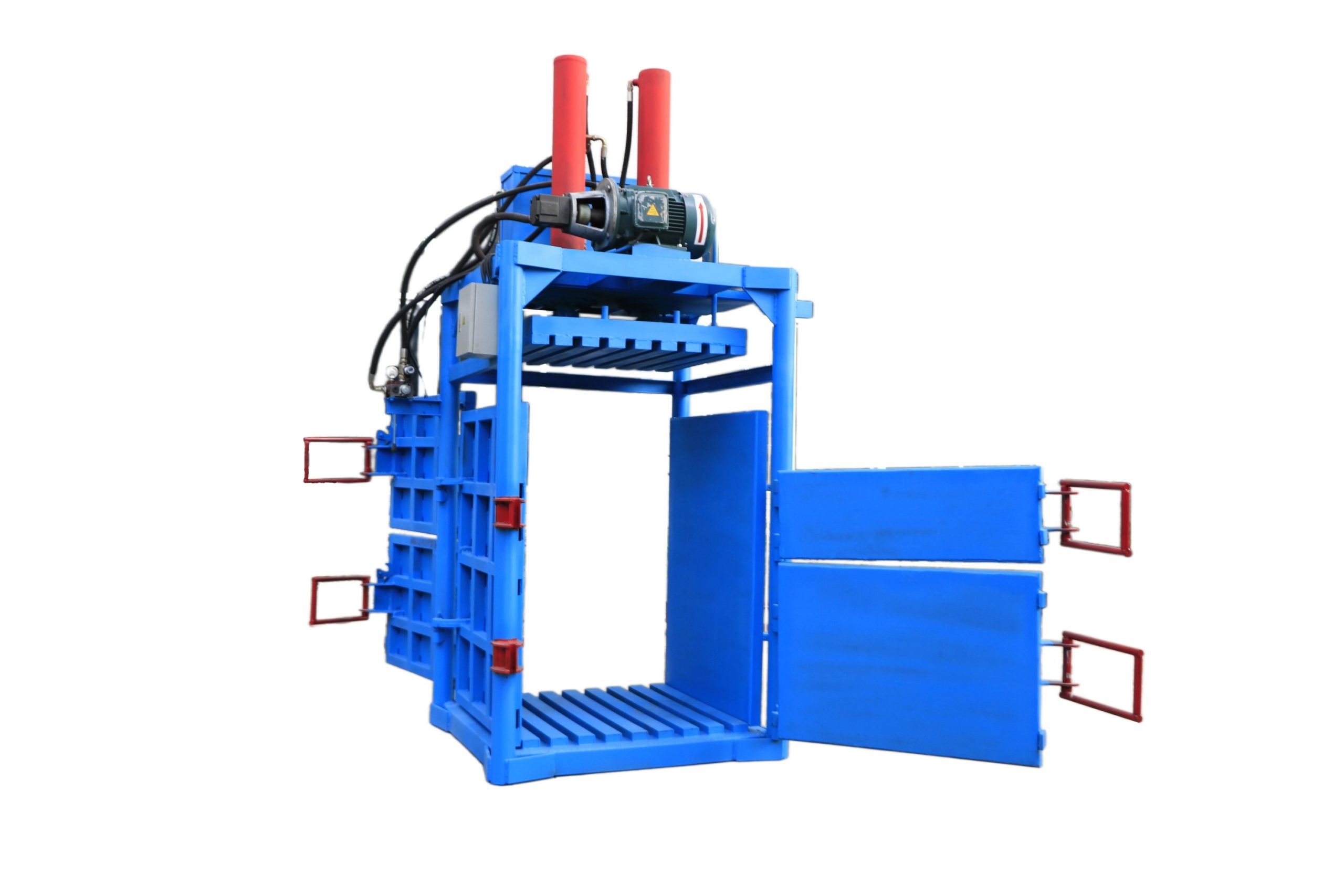
The Vertical Hydraulic Baler is a hydraulic-powered compression machine designed to reduce the volume of recyclable and loose materials. It compresses waste vertically into compact bales, improving storage efficiency, transportation convenience, and recycling value.
This model features a dual-cylinder 30-ton hydraulic system with stable compression force, reliable operation, and high-density bale output. It is widely used in recycling stations, packaging industries, warehouses, factories, supermarkets, and waste processing facilities.
Product Specifications
- Compression Force: 30 Tons
- Bale Size: 900 × 600 × 900 mm
- Chamber Size: 900 × 600 × 1400 mm
- Machine Size: 1550 × 1000 × 3000 mm
- Cylinder Stroke: 1000 mm
Core Features
Powerful Hydraulic Compression
- High-pressure hydraulic cylinders provide strong vertical compression
- Compression ratio typically ranges from 3:1 to 8:1
- Reduces storage and transportation costs significantly
Wide Material Compatibility
Suitable for:
- Waste paper and cardboard
- Plastic bottles and films
- Textile waste and clothing
- Sponge and foam
- Straw and agricultural waste
- Aluminum cans and light metal scraps
Stable Bale Formation
- Multiple strapping slots for secure bale tying
- Prevents bale loosening and rebound
- Produces compact and uniform bale shapes
Safe and Easy Operation
- Safety door interlock protection
- Emergency stop system
- Overload protection
- Simple manual or semi-automatic operation
Compact Vertical Design
- Space-saving structure
- Ideal for small and medium recycling facilities
- Lower investment and maintenance cost compared to horizontal balers
Working Process
- Load loose materials into the chamber
- Close safety door
- Hydraulic ram compresses materials vertically
- Bale is tied using wire or strapping
- Open door and remove finished bale
- Machine resets for next cycle
Machine Structure
- Heavy-duty steel frame
- Hydraulic cylinder and oil system
- Compression head and chamber
- Electrical control system
- Strapping slots and safety devices
Main Advantages
- High compression efficiency
- Low operating cost
- Easy maintenance
- Compact installation space
- Stable bale density
- Suitable for multiple material types
Typical Applications
- Recycling stations
- Paper mills and printing factories
- Plastic processing plants
- Garment and textile factories
- Warehouses and logistics centers
- Supermarkets and shopping malls
- Agricultural waste processing
Vertical vs Horizontal Balers
- Vertical Balers: compact size, lower cost, flexible material handling
- Horizontal Balers: larger capacity, higher automation, continuous production
Frequently Asked Questions
What is the working principle of a vertical hydraulic baler?
Upstroke: The hydraulic pump sends oil into the lower chamber of the cylinder, pushing the piston rod and press plate upward to open the chamber.
Loading: Operators or an automatic feeding system place loose materials into the chamber.
Compression: The directional valve switches the oil flow. Hydraulic oil enters the upper chamber, pushing the press plate downward to compress the material.
Strapping: Once the target compression position is reached, steel wire or strapping bands are inserted through slots for binding.
Bale ejection: The press plate rises again, pushing out the finished compressed bale.
Key parameters and selection guide:
| Parameter | Meaning | Selection Guide |
|---|---|---|
| Rated pressure (tons) | Maximum compression force (e.g., 30T, 60T, 100T) | Soft materials like cartons use lower tonnage; hard materials like metal cans require ≥60T |
| Bale size (L×W×H) | Final compressed block dimensions | Must match transport container width (e.g., 1.1m or 1.3m) |
| Bale weight | Weight per finished bale | Higher density reduces transport cost but requires higher pressure |
| Motor power | Hydraulic pump motor power (kW) | Common: 7.5kW, 15kW, 22kW depending on capacity |
| Door type | Front / side / multi-door design | Side door is better for strapping; front door for easy observation |
Why are the compressed bales loose or not tight enough?
High moisture content: Wet materials (paper, textiles) reduce compression stability. Dry the material before processing.
Insufficient compression cycles: Material should be compressed in multiple cycles (press–release–press), usually 3–5 times.
Insufficient holding time: After reaching target height, hold pressure for 10–30 seconds for stable forming.
Oversized chamber: If machine tonnage is too low, full compression cannot be achieved. Upgrade to higher tonnage.
Why does the hydraulic cylinder move slowly or fail to move?
1. Directional valve failure: Check if solenoid is energized (click sound). Manually test valve spool movement.
2. Oil pump issue: Clogged suction filter reduces oil flow. Clean or replace hydraulic oil.
3. Seal leakage: Internal piston seal damage causes pressure loss. Replace seals.
4. Low oil level: Add 46# or 68# hydraulic oil to standard level.
5. Pressure setting too low: Adjust relief valve using a pressure gauge.
Why does the motor run but the cylinder does not work?
Coupling damage: The elastic coupling between motor and pump is broken.
Wrong motor rotation: Phase sequence reversed. Swap any two power wires.
Safety switch triggered: Door not closed or limit switch not activated, cutting hydraulic signal.
Why is the machine making abnormal noise during operation?
Knocking noise: Worn guide sleeves or loose mechanical pins causing impact.
Hydraulic shock: Sudden relief valve opening due to overpressure.
Regular maintenance and correct oil level can prevent most noise issues.