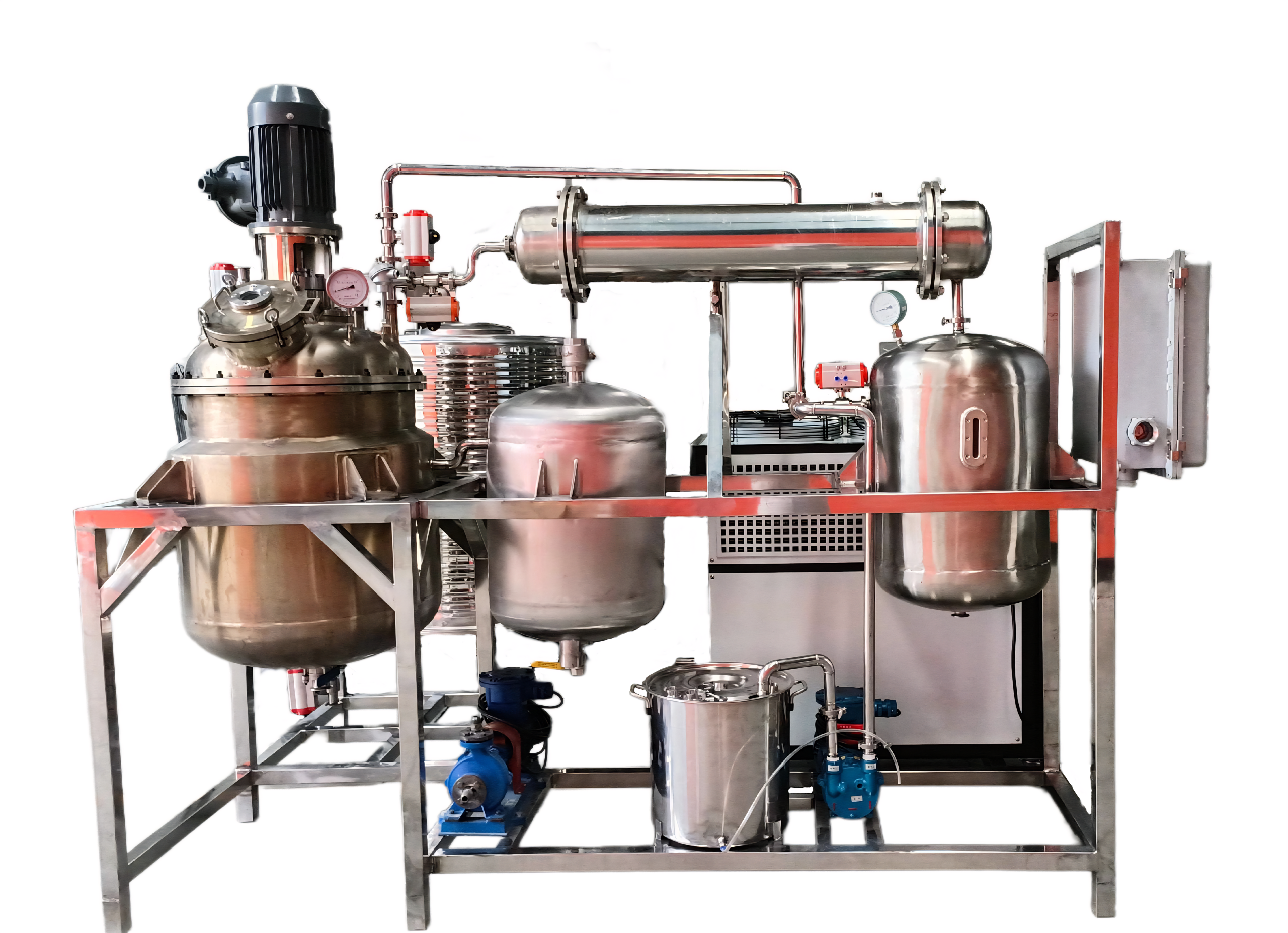
The Stainless Steel Reactor is a high-performance multifunctional pressure vessel integrating heating, vacuum distillation, concentration, extraction, condensation, and mixing systems into one complete industrial solution. Manufactured using high-quality SUS304 or SUS316L stainless steel, the reactor offers excellent corrosion resistance, stable performance, and easy cleaning for various industrial processing applications.
The system is designed for chemical processing, pharmaceutical production, essential oil extraction, food concentration, solvent recovery, and biological processing industries. Through precise temperature control, vacuum technology, efficient stirring, and advanced condensation systems, the reactor enables high-purity separation, low-temperature concentration, and efficient extraction while protecting heat-sensitive materials.
The reactor body features a mirror-polished inner wall for hygienic processing and easy maintenance. Multiple heating methods including electric heating, steam heating, and thermal oil heating are available according to production requirements. The vacuum system reduces boiling points, allowing low-temperature distillation and energy-saving operation.
The intelligent control system supports automatic and semi-automatic operation with accurate control of temperature, pressure, vacuum degree, and stirring speed. Different agitator structures such as anchor type, paddle type, and frame type can be configured to optimize heat transfer and improve mixing efficiency.
This equipment is widely used for:
- Solvent recovery
- Essential oil distillation
- Herbal extraction
- Juice concentration
- Chemical purification
- Biological extraction
- Fine chemical processing
The Stainless Steel Reactor combines durability, efficiency, and multifunctionality, making it an ideal solution for modern industrial production lines.
Frequently Asked Questions
Can 316L stainless steel reactors resist liquid chlorine or hydrochloric acid?
Absolutely not. Even trace amounts of moisture in liquid chlorine can generate hydrochloric acid (HCl), causing severe pitting corrosion on stainless steel. For 316L material, hydrochloric acid concentrations above 5% at temperatures over 50°C can rapidly corrode the reactor. Liquid chlorine systems should use carbon steel under dry conditions, Hastelloy C276, or fluorine-lined equipment.
Why do black spots or small pits appear inside the reactor?
This is a typical sign of chloride pitting corrosion. It often occurs when chlorine-containing solvents such as carbon tetrachloride, chloroform, or dichloroethane are used with moisture contamination. Chloride ions damage the passive layer of stainless steel and accelerate local corrosion.
Can 304 stainless steel be used with concentrated sulfuric acid above 80°C?
It may be used for short periods, but there are risks. Concentrated sulfuric acid above 90% can form a protective passive layer at room temperature. However, when temperatures exceed 80°C or acid concentration drops to 70–80%, the passive layer can fail, resulting in uniform corrosion. Safer options include high-silicon stainless steel or PTFE-lined equipment.
Is it safe to use stainless steel reactors with molten sodium hydroxide at 400°C?
No. Molten strong alkalis such as NaOH can cause caustic embrittlement and stress corrosion cracking in stainless steel at high temperatures. For such applications, nickel-based materials or pure iron reactors are recommended.
Why does the bottom discharge valve become blocked or leak after alkaline discharge?
Hot sodium hydroxide solutions may crystallize during cooling and block the valve core. Residual alkali around weld areas can also cause stress cracking and leakage. After discharge, the valve should be thoroughly rinsed with warm water for more than 30 minutes.
How should carbon deposits inside the reactor be handled during polymerization reactions?
Carbon buildup is usually caused by local overheating or uneven initiator feeding. Preventive measures include maintaining sufficient cooling water flow, using proper agitators, and adding polymerization inhibitors. Do not scrape deposits with metal tools. High-pressure water cleaning or chemical cleaning methods are recommended.
What should be done if stirring current increases sharply during high-viscosity resin reactions?
Immediately reduce stirring speed or increase reactor temperature. High-viscosity materials can overload the agitator system. Do not force higher rotation speed, as this may damage the motor or stirring shaft. Solvent dilution may help reduce viscosity.
What precautions are required for ethylene oxide (EO) reactions in 316L stainless steel reactors?
The key requirement is maintaining a completely dry and alkaline-free system. Ethylene oxide reacts violently in alkaline conditions and may cause runaway reactions. Moisture levels inside the reactor should remain below 100ppm, and nitrogen purging is required before operation to avoid explosive EO-air mixtures.
Will hydrogen embrittlement occur in hydrogenation reactors using 304 stainless steel?
Hydrogen embrittlement may occur, especially in high-pressure and high-temperature environments. For hydrogen pressure around 5MPa, 316L stainless steel or specialized hydrogen-resistant steel is recommended. Reaction temperatures should generally remain below 150°C.
Can sodium hypochlorite be used immediately after processing acidic materials?
No. Mixing sodium hypochlorite with acidic residues may release toxic chlorine gas and damage stainless steel equipment. The reactor must first be thoroughly rinsed with water and neutralized before using oxidizing cleaning agents.